
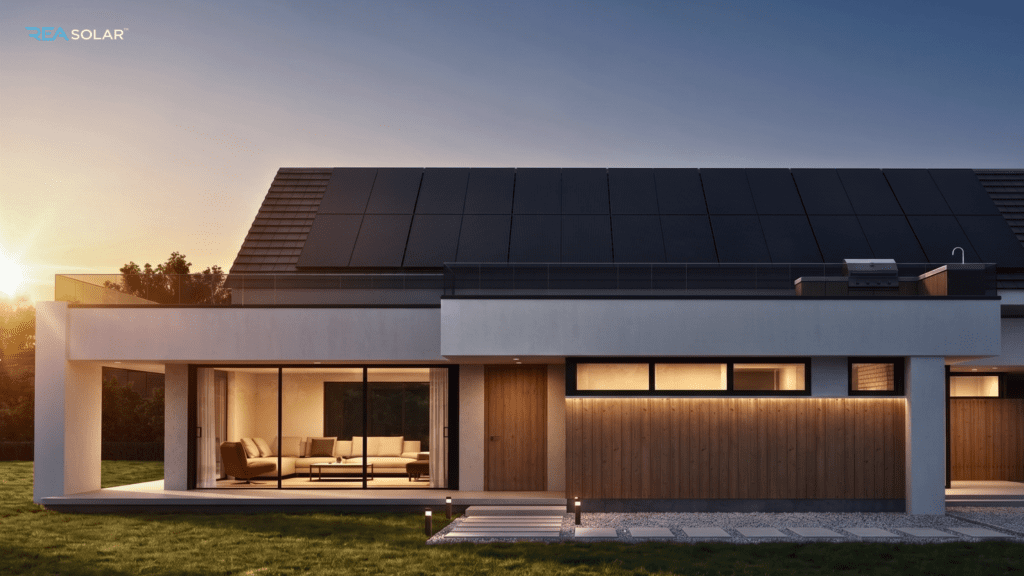
Australia has a problem most countries would love to have: too much solar power in the middle of the day. With more than 4 million rooftop solar systems installed nationwide, midday electricity generation regularly floods the grid, pushing wholesale prices toward zero and sometimes into negative territory.
The Australian Government’s answer is the Solar Sharer Offer (SSO), a new regulated electricity plan that started on 1 July 2026. It requires energy retailers to give eligible households at least three hours of free electricity in the middle of the day, and in South East Queensland, that window runs from 11am to 2pm.
Here’s what it actually means for your household, and how to get real use out of it.
What Is the Solar Sharer Offer?
The SSO is a government-regulated electricity plan available through retailers in South East Queensland, New South Wales and South Australia. It’s part of reforms to the Default Market Offer (DMO), the regulated price safety net for households on standing offers who haven’t shopped around for a better deal.
The key details:
- Free window: 11am–2pm daily in South East Queensland
- Free electricity cap: up to 24kWh per day during the window
- Eligibility: any residential customer with a smart meter — you don’t need your own rooftop solar to sign up
- Opt-in: it’s not automatic. You need to actively choose an SSO plan through a participating retailer
- Everything outside the window, plus any usage above the 24kWh cap, is billed at your plan’s normal rates, and your daily supply charge still applies regardless
Retailers with more than 1,000 customers in South East Queensland are required to make the offer available, so most major providers now have a version of the plan. Terms outside the free window aren’t standardised, though, so it’s worth comparing the whole plan rather than just the headline offer.
Why the Government Introduced It
It comes down to supply and demand. Queensland has some of the highest rooftop solar uptake in the world, and on a clear day, all those panels, plus large-scale solar farms, can push more electricity into the grid than the state needs at lunchtime. Most households, meanwhile, use relatively little power in the middle of the day and much more in the early evening, when demand is higher, and electricity is more expensive.
Rather than curtailing solar generation or letting wholesale prices run negative with no benefit passed on to consumers, the Solar Sharer Offer gives households a reason to shift some of their flexible energy use into the day — running the dishwasher, doing laundry, or charging an EV at midday instead of in the evening. That helps make use of the extra solar and takes a bit of pressure off the grid during the more expensive evening peak.
Cheap or negative wholesale prices don’t automatically mean free electricity for households. That’s where the SSO comes in: it’s the specific government-backed plan that passes some of that daytime benefit on to eligible customers.
If You Already Have Solar
If your home already has rooftop solar, there’s a good chance you’re not drawing much from the grid at 11am anyway — your own panels are likely covering a fair share of your daytime usage already. In that sense, the Solar Sharer Offer is really aimed at bringing the benefit of cheap midday solar to renters and homes without panels, rather than households already generating their own.
That doesn’t mean it’s irrelevant if you have solar. How much difference it makes depends on your household’s actual usage between 11am and 2pm versus what your system generates, your current feed-in tariff, whether you have a battery, and how the rest of the plan is priced. Some solar households will find an SSO plan makes little practical difference. Others, particularly those with bigger daytime loads than their system covers, may still find it worth comparing.
Where a Battery Fits
A home battery’s more established role is storing excess rooftop solar during the day so it can be used in the evening, instead of exporting it to the grid for a modest feed-in tariff and buying it back later at a higher rate. That’s useful on its own, regardless of whether you’re on a Solar Sharer plan.
Whether a battery can also be topped up from the grid for free during the SSO window is a separate question, and it isn’t a given. It depends on the retailer’s specific tariff terms and how your battery and inverter are configured — some setups allow it, others don’t, and it’s not something to assume is included just because you’re on an SSO plan. It’s worth checking with your retailer or installer rather than assuming.
The bigger picture is that cheaper daytime electricity is changing how we think about energy storage. The SSO is one example, but the broader shift is toward making better use of the solar power available during the day. If you’re weighing up a battery, it’s one more factor worth understanding — not a reason on its own to buy one.
Getting the Most Out of the Free Window
- Check you have a smart meter. It’s a requirement for the offer — your retailer can confirm if you’re not sure.
- Shift your biggest loads to 11am–2pm. Dishwashers, washing machines, pool pumps and scheduled EV charging are the easiest to move.
- Watch the 24kWh cap. Most households won’t get close to it, but heavy EV charging could push you over.
- Compare the whole plan, not just the free window. Retailers can structure the rest of the tariff differently, including peak rates and supply charges.
- Use timers or delay-start functions if nobody’s usually home in the middle of the day — that’s often the simplest way to actually use the window.
Thinking About Solar or a Battery?
Schemes like the Solar Sharer Offer are a sign of where the grid is heading: more abundant, cheaper solar in the middle of the day, and a growing case for being able to store and use it on your own terms. What matters more is how your household actually uses electricity, what tariff you’re on, and when you’re buying power from the grid. If you’re weighing up solar, a battery, or both for your Brisbane or South East Queensland home, REA Solar can help you work through what makes sense for your household’s usage and budget.
Get a free quote from REA Solar →
Call REA Solar: 1300 360 047
Frequently Asked Questions
What are the details of the Solar Sharer Offer in 2026?
It’s a regulated electricity plan that started on 1 July 2026 in the Default Market Offer areas of NSW, SA and South East Queensland. Eligible households get at least three hours of free electricity a day, up to 24kWh, provided they have a smart meter and opt in through their retailer.
Who is eligible for the Solar Sharer Offer?
Any residential customer in a Default Market Offer area with a compatible smart meter, whether they rent or own their home. Rooftop solar isn’t required.
Which electricity retailers offer the Solar Sharer Offer?
Any retailer with more than 1,000 customers in a DMO area, including South East Queensland, is required to offer an SSO plan. Availability and the rest of the tariff terms vary by retailer, so check directly with your current or prospective provider.
Do I need solar panels to get the Solar Sharer Offer?
No. It was designed to extend the benefit of daytime solar to households without their own panels, including renters. Having solar doesn’t disqualify you, but it does change how much extra value the free window adds.
What time is the free electricity in Queensland?
11am to 2pm daily in South East Queensland, timed to when solar generation typically peaks in the region.
How much free electricity can I use under the Solar Sharer Offer?
Up to 24kWh during the three-hour window each day. Usage beyond that, and anything used outside 11am–2pm, is charged at your plan’s standard rate, and daily supply charges still apply.
Sources
- Australian Government, energy.gov.au — Solar Sharer Offer
- Minister for Climate Change and Energy, Chris Bowen — media release, minister.dcceew.gov.au
- Energy Made Easy — The Solar Sharer Offer (SSO): What you need to know
- ABC News — Do you qualify for three hours of free electricity?