
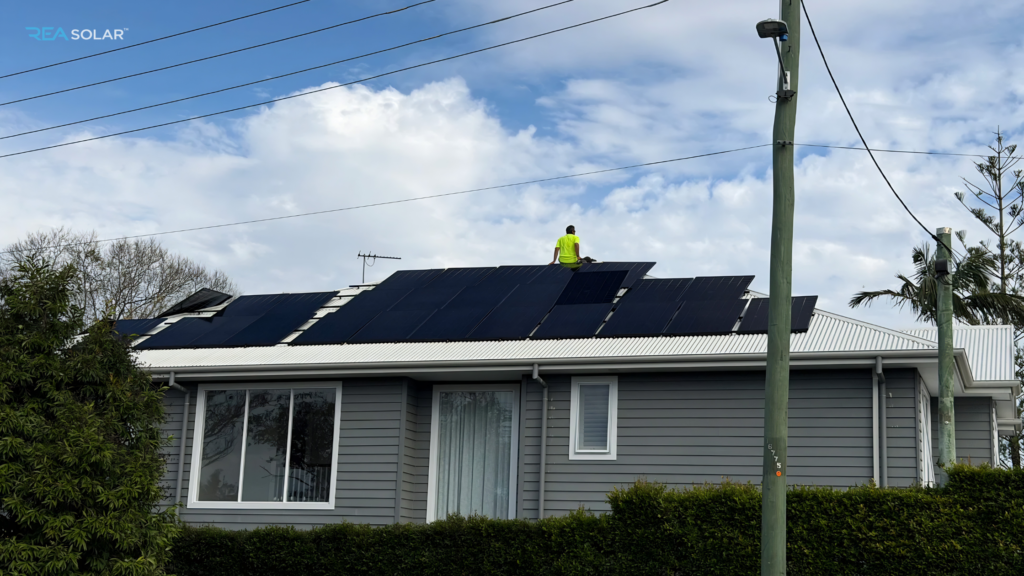
A traditional Queenslander is built differently to the double-brick or slab-on-ground homes most solar guides are written for, and that matters once you start comparing options for solar panels for a Queenslander home. The raised floor, timber framing and corrugated tin roof all change what an installer needs to check before panels go up.
None of this means a Queenslander can’t have solar. It simply means the property doesn’t needs to be assessed with its construction and age in mind. This guide covers what is different about installing solar panels in QLD on a character property, what affects the cost, how roof structure and heritage come into play, and what solar rebate support is actually available in Queensland in 2026.
Why a Queenslander Can Need a Different Approach
Most solar guides assume a modern home: concrete slab, trussed roof, straightforward layout, no heritage overlay. A Queenslander often ticks none of those boxes. Many were built decades ago on stumps, with roof structures designed around traditional materials rather than modern mounting hardware — which doesn’t rule solar out for solar panels in Queensland properties, but does mean an installer needs to look past the roof surface before finalising a design. An older roof may have years of exposure to Queensland heat and humidity, and past renovations can have changed parts of the original structure — details far easier to address before installation than after.
Raised Floors and Roof Framing
The elevated, post-and-beam construction that defines a Queenslander was originally about airflow and flood resilience. It doesn’t affect where panels sit, but it does affect where the inverter, switchboard and cabling go — a raised home more commonly runs cable through the subfloor or externally rather than through an internal ceiling cavity, and the route needs to be planned so it stays safe, compliant and tidy.
Roof framing is one of the first things worth checking. Older Queenslanders were framed for traditional roofing materials, not solar racking, so before finalising a design, an installer should check:
- The condition and spacing of the existing rafters and battens
- Whether the existing timber needs additional bracing at mounting points
- Signs of rot, borer damage or past water ingress from decades of Queensland humidity
If repairs or strengthening are needed, it’s better to deal with them before installation. Finding a structural issue afterwards can mean removing part of a working system to fix it.
Tin and Metal Roofing
Corrugated metal roofing is common on Queenslanders and works well with solar — modern mounting equipment suits a range of profiles, but the roof structure can affect which mounting method actually fits. Older corrugated profiles aren’t always the same as those used on newer homes, so an installer needs to identify the specific profile and use matching clamps rather than assume a standard fit. Sheeting that’s thinned or deteriorated may need attention first — one reason a quote based purely on satellite imagery can miss what a roof actually needs.
Orientation, Pitch and Shading
Queenslanders often have steeper pitches and roofs broken into several planes by verandahs, dormer windows and extensions, which can make the usable area smaller than the total roof size suggests. A north-facing pitch is close to ideal for solar production, but east- and west-facing sections are still worth using — east panels tend to produce more energy earlier in the day, west panels more in the afternoon when household demand often rises.
Shading adds another layer: established trees, neighbouring buildings and the home’s own verandah can shade different roof sections at different times, which matters more on a Queenslander’s multi-plane roof than on one large uninterrupted surface. In some cases, the choice between string inverters, microinverters and power optimisers becomes part of the design conversation rather than a default — there’s no single “best” technology, just the one matched to the actual roof.
Heritage, Character and Keeping the Home Looking Right
A Queenslander doesn’t need to be formally heritage-listed to have planning or character requirements — these can depend on a heritage overlay, character precinct or other local rules covering what’s visible from the street, where panels sit, and how conduit and hardware are finished. This doesn’t apply to every property, so it’s worth checking your specific planning and heritage status rather than assuming either way. Where restrictions do apply, placing panels on a rear or less visible roof plane, with black-framed panels and low-profile mounting, usually keeps a system discreet. Even without formal restrictions, a Queenslander’s roofline is often part of its appeal, and a thoughtful layout keeps it that way.
Choosing the Right System and Understanding the Cost
Choosing the best solar panels for a Queenslander home isn’t about simply picking the highest-wattage panel available — it’s about matching panel size, mounting method and system size to the roof and to how the household actually uses electricity. Recent electricity bills are the best starting point, since they show real usage rather than a guess.
Solar power system prices can vary considerably, and a Queenslander doesn’t automatically cost more than a standard home. Many homeowners want to know the cost of solar panels for a Queenslander home up front, but there usually isn’t one figure that applies to every property — the final price depends on:
- System size, and panel and inverter choice
- Roof condition and profile, which determines the mounting method
- Access — steep pitches or restricted space under a raised floor can add time
- Any bracing, structural work or roof repairs needed before installation
When comparing solar panel Queenslander home prices, look past the headline number. A written, itemised quote should show exactly what’s included, since two quotes for the same system size can cover very different scopes of work.
Queensland Solar Rebates in 2026
For homeowners researching Queensland solar rebate 2026 support, it’s worth separating federal incentives from state-specific ones:
- SRES (federal): an ongoing upfront discount on panel installations via Small-scale Technology Certificates, with the value depending on system size and location; scheduled to keep stepping down toward a 2030 end
- Battery Booster (QLD): closed to new applications in 2024 — there’s no current state battery rebate
- Cheaper Home Batteries Program (federal): may apply to eligible battery installations, though values and eligibility can change
- Supercharged Solar for Renters (QLD): targeted at eligible landlords installing solar on rental properties, not a general homeowner rebate
If you’re checking the solar rebate QLD end date, confirm it against current government information before deciding, since incentive values and timeframes shift and different programs don’t all run on the same schedule.
When Professional Assessment Matters Most
A modern roof can often be assessed largely from satellite imagery, electricity data and a site visit. A Queenslander usually needs a closer look — roof framing condition, the specific metal profile, access beneath the raised structure, and any heritage requirements aren’t always visible from above. A physical inspection catches these before they become a mid-installation problem rather than after.
Why Choose REA Solar
REA Solar designs and installs solar and battery systems across Queensland, including older and character properties where roof structure, access and appearance all need factoring into the design. If you’re comparing solar panels Queenslander home options and want a system matched to your roof and household usage, call REA Solar on 1300 360 047 or get in touch through the contact page.
FAQ
Is solar still worth it in QLD?
For most households, yes — Queensland’s sunlight is strong, but the actual benefit depends on your electricity use, system size, tariff and how much solar energy you use directly rather than export.
Is there a no-cost solar rebate in Queensland for 2026?
No general free-solar program exists for every homeowner. Support comes through federal incentives for panels and batteries, plus targeted state programs like Supercharged Solar for Renters — always confirm current eligibility before assuming a system will be fully funded.
Can solar panels be installed on an old Queenslander?
Yes, provided the roof and structure are suitable. Age itself isn’t the deciding factor — roof condition, framing, available space and electrical setup matter more.
Can solar panels be installed on a tin roof?
Yes. Corrugated and other metal roofing is commonly used with solar, provided the mounting method matches the profile and the roof and framing are in good condition.
Do I need council approval to install solar on a Queenslander?
Not necessarily — it depends on the property’s location, heritage status and any character protections. Checking your specific planning requirements first is the safest approach.
How many solar panels does a Queenslander need?
There’s no standard number. It depends on electricity consumption, usable roof space, orientation and shading — recent electricity bills are the best starting point.
Can I add a battery to solar on a Queenslander home?
Generally yes, though the best approach depends on the existing inverter and system, and — on a raised Queenslander — where the battery and cable route can practically go.